
Manual Lymphatic Drainage vs. "Lymphatic Massage": What's the Difference?
If you've spent any time on TikTok or Instagram lately, you've probably seen videos promising to "drain your lymph," sculpt your jawline, flatten your stomach, or detox your body with a few light massage strokes. While these videos are incredibly popular, they often blur the line between a true Manual Lymphatic Drainage (MLD) treatment and a relaxing light-pressure massage.
As a massage therapist, I love that more people are becoming aware of the lymphatic system. However, there is also a lot of misinformation circulating online. Not every light massage is Manual Lymphatic Drainage, and technique matters more than pressure.
What Is the Lymphatic System?
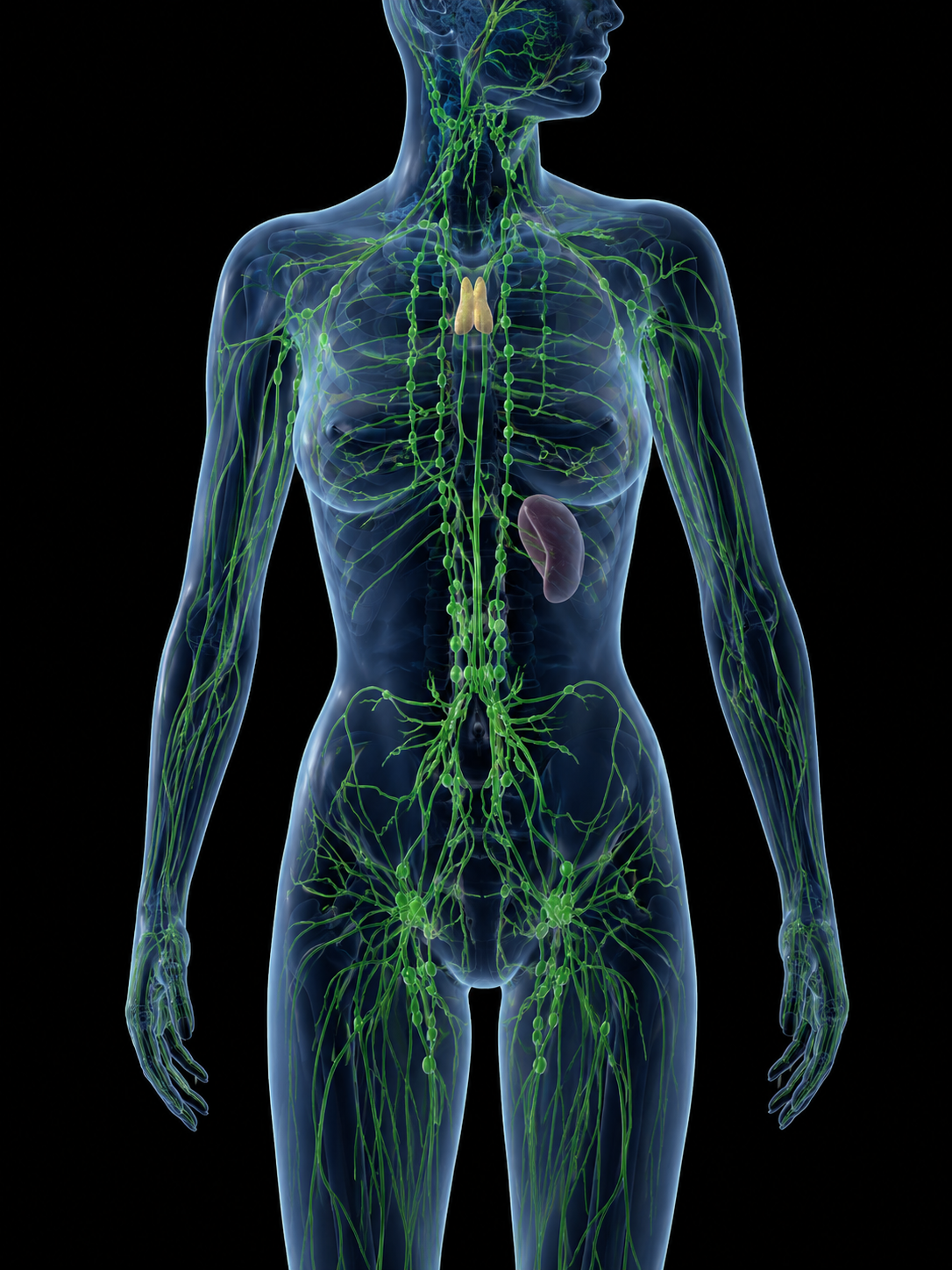
The lymphatic system is part of your immune and circulatory systems. It collects excess fluid, proteins, waste products, and immune cells from your tissues and returns them to the bloodstream. Unlike your heart, which pumps blood continuously, the lymphatic system has no central pump. Instead, lymph moves through a combination of:
Contraction of lymphatic vessels
Skeletal muscle movement
Breathing
Changes in tissue pressure
One-way valves that prevent backflow
Because lymph moves slowly and under very low pressure, techniques designed to influence its movement must work with the body's natural physiology rather than against it.
What Is Manual Lymphatic Drainage?
Manual Lymphatic Drainage is a specialized therapy developed by Emil and Estrid Vodder in the 1930s. Today, several evidence-based schools exist, including Vodder, Foldi, Casley-Smith, and Leduc methods. While each has slight differences, they all share common principles:
Extremely light pressure
Slow rhythm
Stretching the skin rather than compressing muscles
Specific directional strokes
Pumping or circular movements that stimulate superficial lymphatic vessels
Working in a precise sequence that clears central drainage pathways before moving fluid from more distant areas
This is very different from Swedish massage.
Rather than trying to "push fluid" through the body with long gliding strokes, MLD gently stretches the skin to stimulate tiny lymphatic vessels called lymphangions. These small segments of the lymphatic vessels contract on their own. Research suggests that properly applied MLD can enhance this natural pumping activity and improve lymph transport.
Why Pumping Strokes Matter
One of the biggest misconceptions online is that simply stroking lightly toward the heart is enough to move lymph.
The lymphatic capillaries sit just beneath the skin. They respond best to gentle skin stretch, not muscle compression. Pumping techniques create repeated changes in tissue pressure that encourage the opening of microscopic lymphatic capillaries and stimulate lymphatic vessel contractions.
Deep or continuous gliding pressure may actually compress these delicate vessels, making lymph flow less efficient.
Think of watering a garden hose.
If you squeeze the hose too hard, water cannot move through it.
The lymphatic system works similarly. Gentle rhythmic stimulation is often more effective than stronger pressure.
Why Sequence Matters
Another major difference between authentic MLD and many social media "lymphatic massages" is treatment order.
An experienced MLD therapist does not simply begin where swelling exists.
Instead, they first "clear" the major drainage areas, often beginning around the neck and central lymphatic pathways before addressing the swollen region. This creates available space for lymph to move into.
Imagine trying to merge onto a freeway that's already completely backed up. Traffic cannot flow until congestion ahead begins to clear.
The same principle applies to lymphatic drainage.
Can Regular Massage Move Lymph?
Yes.
Nearly all massage techniques create some movement of tissue fluid.
Swedish massage, myofascial work, exercise, walking, diaphragmatic breathing, and muscle contractions all contribute to lymph circulation.
However, that does not make them Manual Lymphatic Drainage.
The goal of Swedish massage is relaxation and improved circulation within muscles.
The goal of MLD is specifically to stimulate superficial lymphatic vessels using techniques designed around lymphatic anatomy and physiology.
Both have value—they simply serve different purposes.
What About "Lymphatic Sculpting" or Facial Contouring?
Many facial massage videos show temporary reductions in puffiness.
This is absolutely possible.
Reducing superficial fluid can temporarily improve facial definition, especially first thing in the morning or after a salty meal.
However, permanent facial sculpting is not what MLD is designed to accomplish.
The changes are generally temporary because fluid naturally redistributes throughout the day.
Be cautious of claims that a single lymphatic massage will permanently reshape your face or melt body fat. There is no good scientific evidence supporting these claims.
Does Manual Lymphatic Drainage Detox the Body?
This is another common claim that deserves clarification.
Your lymphatic system does transport waste products, proteins, inflammatory molecules, and immune cells.
However, your liver and kidneys are the primary organs responsible for detoxification.
Manual Lymphatic Drainage does not "flush toxins" out of your body in the way social media often suggests.
Instead, it supports one of the body's normal fluid management and immune transport systems. This is why I stress the importance of proper hydration before and after a service. Without it, nothing is actually eliminated.
Who Benefits Most from Manual Lymphatic Drainage?
MLD may be beneficial for people experiencing:
Lymphedema
Fluid retention
Mild swelling after surgery (when medically appropriate)
Post-operative recovery following cosmetic procedures
Certain cases of chronic edema
Facial swelling
Sinus congestion
Stress reduction through gentle nervous system regulation
It is not appropriate for everyone. Certain medical conditions—including acute infections, untreated heart failure, some kidney conditions, active blood clots, and other health concerns—may require medical clearance or make treatment inappropriate. A qualified therapist should always complete a thorough health history before treatment.
The Bottom Line
Manual Lymphatic Drainage is much more than a light massage.
Its effectiveness comes from understanding lymphatic anatomy, using precise pumping techniques, following the correct treatment sequence, and working with the body's natural physiology rather than simply applying gentle pressure.
While many social media videos are well intentioned, calling every light massage a "lymphatic massage" can create confusion about what this specialized treatment actually involves.
If your goal is true lymphatic support—whether for swelling, post-surgical recovery, or therapeutic care—it's worth seeking a therapist who has completed formal Manual Lymphatic Drainage training rather than relying on trending techniques online.
At Spiral Quest Healing, as a Certified Manual Lymphatic Drainage practitioner, I approach each session as a therapeutic treatment, not a beauty trend. Every session begins with an assessment, follows established lymphatic principles, and is tailored to your body's needs while considering any medical conditions or contraindications. My goal is to support your body's natural healing processes safely, effectively, and with the care this specialized technique deserves.
If you would like to book a session with me I’d love to work with you!
Scientific References
International Society of Lymphology. (2023). The Diagnosis and Treatment of Peripheral Lymphedema: 2023 Consensus Document of the International Society of Lymphology.
Foldi M, Foldi E, Kubik S. Textbook of Lymphology: For Physicians and Lymphedema Therapists. 3rd ed. Elsevier.
Leduc O, Leduc A. Manual Lymphatic Drainage.
Mortimer PS, Rockson SG. New developments in clinical aspects of lymphatic disease. Journal of Clinical Investigation. 2014;124(3):915-921.
Rockson SG. Lymphedema. American Journal of Medicine. 2001;110(4):288-295.
Ridner SH. Pathophysiology of lymphedema. Seminars in Oncology Nursing. 2013;29(1):4-11.
Scallan JP, Zawieja SD, Castorena-Gonzalez JA, Davis MJ. Lymphatic pumping: mechanics, mechanisms and malfunction. Journal of Physiology. 2016;594(20):5749-5768.
Gashev AA. Physiologic aspects of lymphatic contractile function. Annals of the New York Academy of Sciences. 2008;1131:100-109.
Havas E, et al. Manual lymph drainage treatment stimulates the lymphatic system. Lymphology. 1997.
